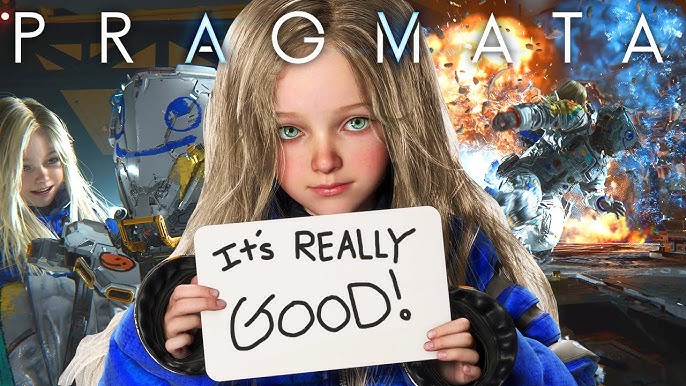
Pragmata Review – Capcom’s Next Big Gaming Hit Has Arrived
Pragmata Review
Games like Pragmata are incredibly rare in today’s industry.
I had low expectations going into Pragmata. A brand new Capcom IP, announced years ago with almost no updates, finally arriving with serious ambition — that combination usually ends in disappointment. It didn’t. Pragmata is one of the most surprising games I’ve played in 2026, and the reason it works comes down to one thing: it commits completely to its central idea and never lets go. The hacking combat system built around Hugh and Diana’s partnership sounds gimmicky on paper. In practice, it creates some of the most tense, rewarding encounters I’ve had in a third-person shooter in years.
What makes Pragmata special isn’t any single system or set piece — it’s the fact that everything in it serves the same central idea. Hugh and Diana’s partnership isn’t just a story beat. It’s the combat system. It’s the progression. It’s the emotional core of the whole experience. I’ve played a lot of games that talk about their characters having a meaningful bond. Pragmata is one of the very few that actually makes you feel it through the gameplay itself, not just the cutscenes.
What truly makes Pragmata stand out is how naturally all of its ideas come together. The action feels satisfying, the world is intriguing, and the storytelling adds emotional depth without slowing the pace of the experience. It’s easily one of the biggest surprises of 2026 so far and already feels like a strong contender for one of the year’s best games.
Setting of the Story
You step into the role of Hugh Williams, an ordinary astronaut sent to a corporate medical research facility located on the moon. From the moment you arrive, the base is surrounded by an unsettling silence that immediately suggests something is deeply wrong beneath the surface. Before Hugh and his crew have any real chance to investigate the situation, a devastating moonquake tears through the facility, leaving him as the sole survivor.
Stranded inside the collapsing colony and hunted by waves of hostile robots, Hugh’s only hope for survival comes from a mysterious android girl with the ability to hack and disable the otherwise unstoppable machines. When she attempts to introduce herself using a complex alphanumeric designation, Hugh instead gives her the name Diana, creating a more personal connection between the two characters.
From that moment onward, Hugh and Diana become inseparable as they fight to survive the growing dangers hidden throughout the lunar facility. Their evolving relationship quickly becomes the emotional core of the experience, adding humanity and heart to Pragmata’s tense sci-fi atmosphere and action-driven gameplay.
Pragmata embraces a near-future science-fiction setting, meaning its technology feels advanced and imaginative while remaining grounded in concepts that seem realistically possible. Rather than relying entirely on fantasy-like sci-fi elements, the game builds a world that feels believable and carefully connected to real-world technological ideas.
Hugh’s equipment perfectly reflects this design philosophy. His helmet carries a sleek and futuristic appearance similar to something seen in Destiny, while the rest of his astronaut suit remains bulky, practical, and heavily inspired by real NASA space gear. The result is a visual style that feels futuristic without losing its sense of realism.
The most impressive piece of technology on the lunar base, outside of Diana herself, is something known as lunafilament. This material acts as a universal resource capable of being used for advanced 3D printing, allowing the colony to manufacture nearly anything it needs and operate as a largely self-sustaining facility. The game repeatedly highlights how integrated this technology is within the station’s daily operations, helping the setting feel both advanced and believable at the same time.
That balance is what makes Pragmata’s world so compelling. Its sci-fi ideas are ambitious and creative, but they never feel completely disconnected from reality, giving the entire experience a grounded and immersive atmosphere.

The Hugh And Diana Dynamic
Hugh and Diana’s dynamic is the entire game. Not just narratively — mechanically. Every fight asks you to split your attention between shooting in the real world and solving Diana’s hacking grid simultaneously. The first time an enemy charged me while I was mid-hack, I panicked and got hit. By hour five, juggling both felt completely natural. That learning curve is one of the best-designed onboarding experiences I’ve seen in a shooter.
Whenever you aim at an enemy robot, the game overlays a hacking interface beside the target, showing the battlefield through Diana’s perspective. These hacking grids begin relatively simple but steadily evolve into larger and more complex puzzles as the game progresses. Using the controller’s face buttons, players must guide a path from a starting point to a finishing node while simultaneously moving, dodging attacks, and firing weapons in real time.
A combat system that keeps you on your toes
This mechanic creates a constant sense of pressure during every encounter. Enemy robots are nearly impossible to destroy using standard gunfire alone because of their heavy armor. Only after completing Diana’s hacking sequence do their defenses open up, exposing weak points and finally making them vulnerable to attack.
The result is a combat system that feels tense, strategic, and constantly engaging. Every fight becomes a balancing act between solving hacks quickly enough and maintaining enough distance to survive incoming attacks. Since players are forced to split their attention between the hacking interface and advancing enemies, encounters often become frantic in the best possible way. It creates the same kind of high-pressure multitasking that made games like Dead Space so memorable, where survival depended on making fast decisions under constant stress.
As new enemy types and combinations are introduced, combat naturally becomes deeper and more demanding. Some encounters force you to rethink your strategy entirely, rewarding creativity and improvisation rather than simple reflexes. One standout example involved a cloaked robot disappearing into the darkness after partially being hacked. With no clear target visible, firing the wide explosive blast of the Riot Blaster into the area exposed the enemy’s position again, allowing the hacking process to continue. Moments like this make Pragmata’s combat feel dynamic and unpredictable, encouraging players to experiment with the game’s systems in clever ways.
The first time an enemy charged me while I was mid-hac,k I completely panicked. I fumbled the grid, took a hit, and nearly died. My instinct was to ignore the hacking interface and just shoot, which does almost nothing because of the enemy armor. That tension between solving Diana’s puzzle and surviving Hugh’s situation is the entire game in one moment, and learning to hold both in your head at once is one of the most genuinely satisfying skill progressions I’ve experienced in a shooter on PC.
What stops it from feeling gimmicky is how naturally the difficulty scales. Early hacking grids are simple enough that you can solve them almost on autopilot while shooting. By the midgame,e they’re sprawling puzzles with multiple paths and special nodes that force real decisions under fire. I had one encounter against two armored units simultaneously where I was managing two separate hack sequences, rotating between weapons to keep both occupied, and genuinely sweating the whole way through. When I finally cleared, I exhaled like I’d been holding my breath the entire fight. That feeling never really went away.
The weapon variety keeps combat from ever feeling stale. The Sticky Bomb that shrinks an enemy’s hacking grid is a godsend in tight situations and I used it more than any other tool in my kit. The ammo management system — where your default gun regenerates slowly rather than reloading instantly — forces you to actually think about rotation instead of just falling back on one weapon for everything. It sounds like a small design cchoiceoice but it makes every encounter feel like a resource puzzle as much as an action sequence.
Ammo management also adds another layer of tension. Hugh’s default weapon has unlimited ammunition, but its clip slowly regenerates over time rather than instantly reloading. This forces players to constantly rotate between weapons instead of relying on a single firearm throughout an encounter. Secondary weapons can either be scavenged during missions or equipped beforehand, meaning larger fights often become desperate resource-management battles where players are constantly adapting based on what remains available.
Taken together, Pragmata’s combat system feels fresh, intelligent, and remarkably satisfying. It combines traditional shooter mechanics with strategic hacking in a way that genuinely feels new, giving every battle a sense of intensity and momentum that rarely fades throughout the experience.
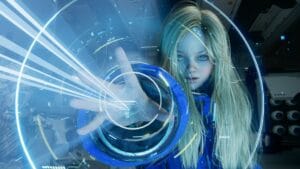
Diana’s abilities are far deeper and more versatile than they initially appear, adding another major layer of strategy to Pragmata’s already impressive combat system. By default, enemy hacking grids contain blue Open Nodes that increase the amount of damage dealt whenever your hacking path successfully passes through them before reaching the final target node. Even at a basic level, this system encourages players to think carefully about the routes they take during combat rather than simply rushing to complete the hack as quickly as possible.
As the game progresses, however, the hacking mechanics become significantly more advanced. Players can discover and equip specialized yellow hacking nodes that introduce entirely new effects during encounters. These consumable nodes can temporarily boost weapon damage, overheat enemy robots, and apply other tactical advantages that dramatically change the flow of combat. The catch is that these nodes appear randomly within the hacking grid itself, meaning players constantly face split-second decisions during intense firefights. Using a powerful node can completely shift a battle in your favor, but avoiding one to save it for later also creates additional obstacles inside the hacking puzzle.
On top of that, Pragmata introduces Hacking Modes, which completely alter the purpose and behavior of the hacking system itself. Rather than simply acting as modifiers, these modes fundamentally reshape combat strategies and encourage entirely different approaches to encounters.
One of the most effective examples is the Strike Mode, which transforms standard Open Nodes into high-damage Strike Nodes. These nodes become significantly more powerful against already exposed enemies, especially when combined with conventional weapon fire beforehand. Instead of focusing purely on fast hacks and nonstop shooting, this mode encourages a far more tactical rhythm during combat. The strategy becomes about weakening enemies with gunfire first, diving back into the hacking grid to maximize Strike Node damage, and carefully timing everything before the enemy’s defenses recover.
What makes this system so impressive is how naturally it changes the player’s mindset. Combat constantly evolves as new tools, modifiers, and hacking strategies become available, making every encounter feel more dynamic and customizable. Rather than forcing a single playstyle, Pragmata rewards experimentation and smart decision-making, allowing players to develop combat tactics that feel uniquely their own.
That flexibility is a huge part of what makes Pragmata stand out. The game doesn’t just introduce creative mechanics for the sake of being different — it builds entire combat systems around them in a way that feels fresh, rewarding, and surprisingly addictive.
How Shelter Is A Fun Part
Between missions, the Shelter quickly became my favourite part of the game. There’s something genuinely calming about returning to base, upgrading your kit, and spending time with Diana through the Earth artefacts you collect on missions. These quiet moments do more for the story than any cutscene. One particular holographic recording Hugh shares with Diana — a memory from his childhood — stopped me completely. It’s a small scene, easy to miss, but it reframes everything about his character. That’s the kind of storytelling Pragmata does quietly and consistently throughout.
Inside the Shelter, players can improve nearly every aspect of Hugh and Diana’s abilities. You’re able to upgrade core stats such as health, weapon damage, and hacking efficiency, unlock entirely new abilities, enhance existing weapons, and purchase powerful combat upgrades that dramatically impact gameplay. There’s also a training center for testing mechanics and refining strategies before heading back into dangerous missions.
One of the Shelter’s most memorable features is the ability to strengthen Hugh and Diana’s relationship through collectibles found across the lunar base. Throughout exploration, players discover keepsakes and holographic artifacts from Earth that can be gifted to Diana. These interactions do more than simply unlock rewards — they help develop the bond between the two characters and give the story a surprisingly emotional layer beneath all the sci-fi action.
Even the game’s side activities feel meaningful. A friendly robot inside the Shelter introduces a series of bingo-style boards that can be completed using special coins earned through missions and bonding moments with Diana. The rewards range from cosmetic outfits and enemy model displays to powerful hacking upgrades, making downtime between missions feel productive rather than repetitive.
The Shelter also serves an important gameplay purpose beyond progression. While exploring stages, players regularly encounter checkpoints that allow them to instantly return to the hub. Doing so causes enemies to respawn, but the trade-off is often worthwhile. Returning to heal, purchase upgrades, restock supplies, and improve equipment creates a satisfying gameplay loop that encourages preparation and strategy instead of nonstop linear progression.
Pragmata’s stage design further strengthens this structure. Levels are built around exploration and replayability, with hidden paths, locked areas, and upgrade-based traversal mechanics encouraging players to revisit earlier stages later in the game. Some of the most rewarding discoveries are hidden behind difficult optional challenge rooms marked in red, containing tougher enemy encounters and valuable rewards. Accessing these rooms requires special keycards, adding another layer of exploration and progression to the overall experience.
Beyond gameplay systems, however, the Shelter is where Pragmata’s story truly shines. It provides quiet moments where Hugh and Diana can interact naturally away from combat, allowing their relationship to grow over time. Through holographic Earth artifacts and personal conversations, Hugh shares stories about life back on Earth and reflects on his own childhood experiences, helping Diana slowly understand the world beyond the moon base.
The story itself follows a familiar but effective dynamic — a hardened protector guiding a gifted yet inexperienced child through a dangerous world. While that setup has been explored before, Pragmata succeeds because of how much time it dedicates to developing its characters naturally. Since the game focuses almost entirely on Hugh and Diana throughout its runtime, their relationship steadily evolves through small conversations, emotional moments, and shared experiences rather than forced exposition.
Diana quickly becomes the emotional heart of the game. She’s intelligent, curious, and surprisingly believable as a child character, balancing innocence with sharp instincts and an occasionally awkward charm that makes her instantly likable. Hugh initially seems to adapt to the role of protector very quickly, but as more details about his past and personal experiences emerge, his connection with Diana feels increasingly genuine and emotionally satisfying.
That emotional grounding is ultimately what elevates Pragmata beyond being just another sci-fi shooter. Beneath its impressive combat systems and futuristic setting is a story driven by trust, survival, and human connection, giving the entire experience far more heart than most games in the genre.

Even within the framework of a familiar sci-fi narrative, Pragmata consistently finds ways to surprise players through both major story revelations and smaller character-driven moments. The game’s worldbuilding is handled with impressive attention to detail, using holographic recordings, abandoned datapads, and environmental storytelling not just to expand the setting, but to subtly plant clues about the larger mysteries unfolding throughout the lunar facility.
What makes the storytelling especially effective is how naturally these discoveries build curiosity. As more information is uncovered, players slowly begin piecing together theories about the fate of the Cradle, the collapse of the research base, the malfunctioning AI systems, and Diana’s true connection to everything happening behind the scenes. At several points, the narrative rewards careful observation by validating player suspicions, while other moments cleverly subvert expectations entirely, keeping the mystery engaging from beginning to end.
The gradual unraveling of the game’s secrets carries a similar sense of discovery to experiences like Horizon Zero Dawn, where every new revelation adds another meaningful layer to the world and characters. Rather than relying purely on exposition, Pragmata trusts players to connect the dots themselves, making each discovery feel far more impactful.
All of this builds toward a finale that delivers on both gameplay and storytelling. The conclusion challenges everything players have learned mechanically while also bringing genuine emotional weight to Hugh and Diana’s journey. It’s the kind of ending that feels satisfying while still leaving players wanting more from these characters and this universe.
Even after the credits roll, Pragmata offers a substantial amount of post-game content and additional challenges to tackle. Still, the game’s greatest strength remains the combination of its intelligent combat systems, deep strategic gameplay, atmospheric worldbuilding, and emotionally grounded storytelling.
My Thoughts
Pragmata took me around 15 hours, on PC and I enjoyed almost every minute of it. The hacking combat system is one of the most original things I’ve seen in a third-person shooter in years, the world is built with genuine care, and Hugh and Diana’s relationship earns every emotional beat the story asks you to feel. Capcom took a real swing with this one, and it landed. If you’re a fan of smart, story-driven action games,— this is one of the best of 2026.
Final Score: 8.5/10 — Original, emotional, and mechanically brilliant. Don’t miss it.
We’ll be covering every new update on kickofdraft.com as it drops — release date, new trailers, gameplay details, indie hits
.

Hello! I am Mr. Sano Ethan, a content creator, variety gamer, and the driving force behind Kick Of Draft. With over 6 years of hands-on experience across PC, console, and indie gaming,
Submit your review | |
Pingback: Resident Evil 4 Remake Review: Capcom Rebuilt a Legend and Made It Better - Kick Of Draft