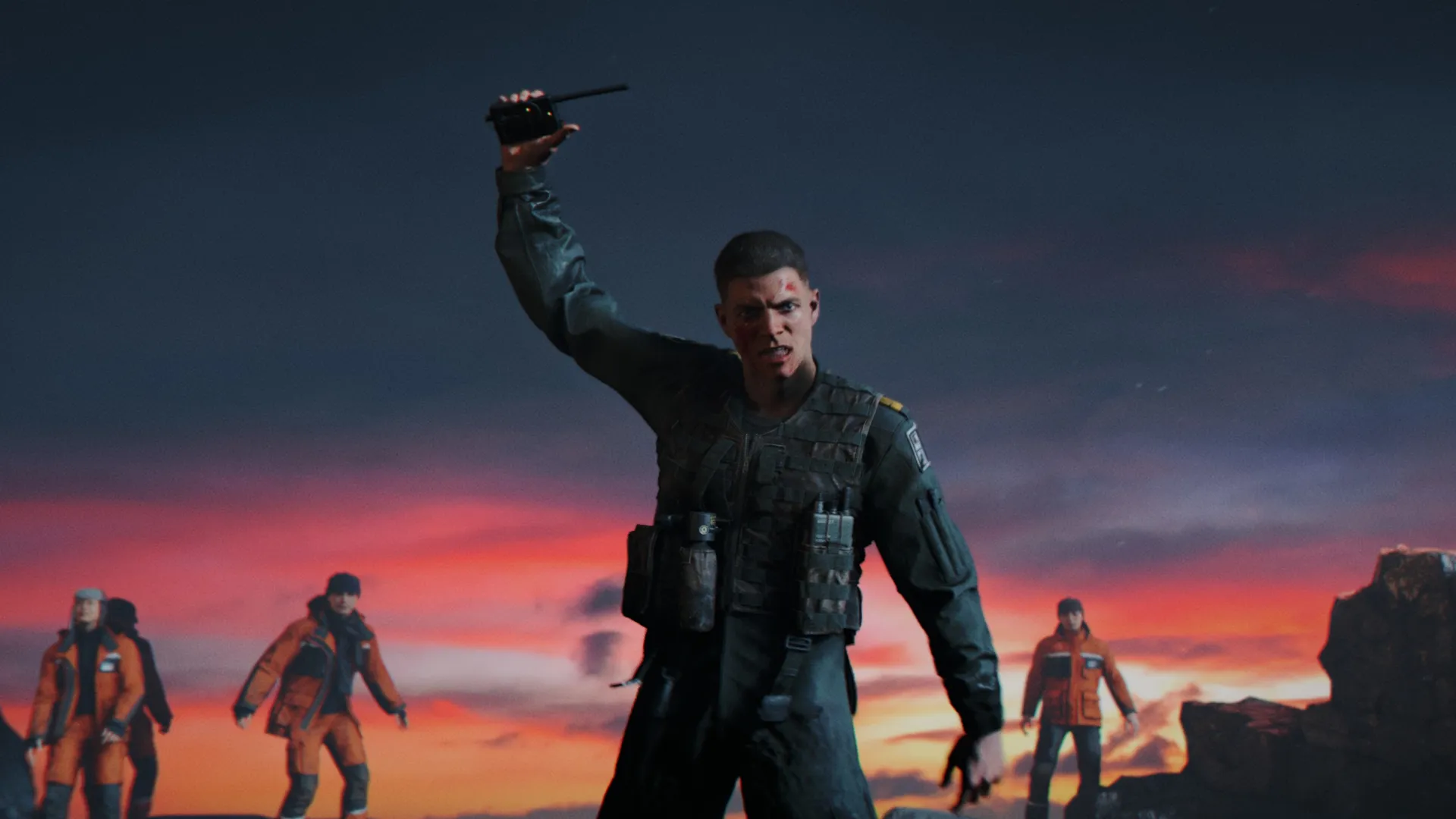
007 First Light Review : The Highly Anticipated Bond Game
Table of Contents
ToggleThe Bond Game We’ve Been Waiting For
I‘ve spent years wondering what would happen if IO Interactive ever got to make a James Bond game. The match always seemed obvious on paper — the studio behind the Hitman series understands espionage, infiltration, disguise, and social manipulation better than almost anyone in the industry. But James Bond isn’t Agent 47. He doesn’t disappear into crowds. He walks directly into the spotlight and makes everyone believe he’s supposed to be there. That’s a completely different kind of power fantasy, and pulling it off in a game is genuinely hard. When 007 First Light was announced, I was excited and nervous at the same time. When I finally sat down and played it on PC, that nervousness disappeared somewhere around the end of the first mission and didn’t come back.
This is the Bond game I’ve been waiting for. Not a perfect one — but a confident one. And for a franchise that has spent decades struggling to find its identity in video games, confidence is exactly what was needed first.
A Younger Bond With Something To Prove
The smartest thing IO does is start from zero. This Bond is younger, rougher, and hasn’t fully grown into the legend yet. He’s talented, and he knows it — maybe too well — and that arrogance gets him into trouble in ways that a more experienced version of the character would have avoided. I wasn’t expecting to find Bond’s mistakes more interesting than his victories, but that’s what happened. There’s a moment in the early game where he makes a call based on instinct rather than intelligence, and it costs him badly. A more traditional Bond game would have framed that as a cool improvisation. First Light frames it as a genuine error and makes you sit with the consequences. That honesty about the character is what sets this game apart from almost every Bond adaptation before it.
The origin story structure lets the game earn its classic Bond moments rather than just handing them out. The gadgets arrive gradually. The confidence builds. By the time the game leans into full Bond mode — globe-trotting, high-stakes, larger-than-life — you feel like you’ve watched him grow into it rather than just being dropped into it from the start. That pacing is deliberate, and it works.
The story itself moves fast across frozen landscapes, crowded cities, and hostile territories, with the kind of betrayals and conspiracy threads you’d expect from a Bond adventure. It doesn’t reinvent the formula. But it tells the story it’s trying to tell with more focus and more character work than I was expecting, and by the end, I was genuinely invested in where this version of Bond was going next.
Not Hitman In A Tuxedo
The first thing everyone is going to ask is whether this is just Hitman with Bond branding slapped on top. It isn’t. I say that as someone who has played every Hitman game IO has made — the DNA is there, obviously, but First Light has built its own identity,y and it’s clear from the first mission that this wasn’t just a reskin. Hitman is about patience, experimentation, and the satisfaction of running a perfect operation that no one ever noticed. First Light is about momentum. The missions have flexibility, ty, and the stealth systems are genuinely good, but the game is always moving you toward the next beat rather than letting you loop indefinitely.
That shift in rhythm took me about an hour to properly adjust to. My instinct, not coming from Hi,tman, was to slow down, scout everything, and find the optimal path. First Light rewards that approach up to a point and then nudges you forward anyway. Once I stopped resisting that nudge, the game opened up completely. The balance between quiet infiltration and explosive chaos is calibrated much better than I expected — one moment you’re moving through a guarded facility using nothing but observation and patience, twenty minutes later you’re escaping a situation that has completely fallen apart around you, and the transition between those two things almost always feels earned rather than forced.
That rhythm is what makes this feel like a Bond game rather than a spy game. The difference matters. Spy games are about control. Bond is about controlled chaos — the ability to adapt when everything goes wrong and make it look intentional. First Light gets that distinction right in a way I didn’t think it would.
The Fantasy Of Being James Bond
There’s a specific feeling this game is going for,r and it nails it more often than not. You’re not just completing missions — you’re being Bond. The way he moves, the dialogue options that let you talk your way into or out of situations, the investigative sections where you’re reading a room and piecing together your approach before committing to anything — all of it feeds into the same central fantasy. I spent twenty minutes on one optional conversation path in a mid-game mission just to see how far I could get through a restricted area purely through social manipulation before anything kicked off. I got further than I expected. When it finally went wrong, I laughed out loud because even the failure felt appropriate.
The gadgets are integrated well enough that they feel like tools rather than cheat codes. Nothing is overpowered, nothing trivialises the challenge, but having the right gadget for a situation creates moments of genuine satisfaction. There was one sequence where I used a piece of equipment in a way the game clearly intended as optional that completely changed how a tense section played out, and the fact that the game let me do that without making a big deal of it felt exactly right. Bond doesn’t announce when he’s being clever. He just moves on.
The investigative sections deserve specific praise. They slow everything down and force you to pay attention — reading environments, gathering information, making decisions based on what you’ve observed rather than what you’ve been told. They’re not as deep as the best Hitman sandboxes, but they’re doing something those games don’t, which is tying observation directly to character and story rather than just to mechanical efficiency. When Bond figures something out in these sections,s it feels like his intelligence, not just yours.
When Things Go Loud
First Light is at its most fun when everything goes wrong at the same time. The action sequences are loud, dramatic, and completely committed to being the kind of set pieces you’d see in a Bond film — car chases that keep escalating, shootouts in increasingly chaotic environments, rooftop escapes where the building seems to be falling apart faster than you can move through it. I had one sequence in the second half of the game where I was pinned down, running low on ammo, with two objectives still active and what felt like the entire map aware of my position. I improvised my way through it badly and messily, ly and it was one of the most fun twenty minutes I’ve had in a game this year.
The combat isn’t flawless. Enemy AI has moments where it makes decisions that don’t hold up to much scrutiny, and a couple of the straight gunfight sections feel less refined than the stealth systems around them. It’s noticeable, particularly when a mission has been tight and well-designed right up to a combat encounter that suddenly feels a bit loose. It never broke the experience for me, but it’s the area where the game has the most room to grow in future entries.
What carries even the weaker combat moments is the presentation. The spectacle is genuinely hard to resist. IO knows how to build a set piece, and the action sequences here are the clearest evidence that they understood the assignment — this is supposed to feel like a movie you’re inside, and it does.
A World Built For Espionage
The variety of locations is one of the game’s most consistent strengths. Every major area has its own visual identity, its own atmosphere, and its own set of gameplay opportunities. No two missions feel like they’re pulling from the same template, which for a game of this length is genuinely impressive. IO’s environmental design has always been exceptional, and that skill transfers here completely — locations feel inhabited rather than constructed, like real places that happen to also be exactly what Bond needs them to be at that exact moment.
I kept stopping to look at things. A hallway in a government building with a specific piece of art on the wall that I’m fairly sure was a deliberate reference to something in the franchise’s history. A safehouse that had clearly been abandoned in a hurry, with details that told a whole story without a single word of dialogue. That level of environmental care is what separates a game that’s set somewhere from a game that actually lives somewhere. First Light lives in its locations.
The Performance That Holds Everything Together
The game looks fantastic on PC — the Glacier Engine continues to be one of the best in the industry for character detail and lighting, and First Light uses it well across every environment type. Glamorous interiors, hostile wilderness, urban decay — all of it is rendered with the kind of quality that makes it feel like a genuine AAA production rather than a licensed tie-in. But visuals are easier to get right with a big budget. What impressed me more was the voice acting. Bond himself is charismatic without becoming a parody — there’s restraint in the performance that fits the younger, less polished version of the character the story is building. The supporting cast is strong across the board. Characters who could easily have been forgettable feel distinct and worth paying attention to.
Some missions also feel more restrictive than others in a way that’s hard to pin down precisely. The best levels balance player freedom with narrative momentum perfectly. The weaker ones tip slightly too far toward keeping the story moving at the cost of letting you actually think. It’s a tension IO has navigated brilliantly in their Hitman work,rk and it doesn’t always resolve as cleanly here. That’s understandable given how different the design brief is, but it’s worth acknowledging.

Where The Cracks Begin To Show
As strong as First Light is, it isn’t flawless.
The story occasionally struggles with pacing. Some sections stretch longer than necessary, and a few plot developments don’t land with the emotional impact they seem to be aiming for. Certain character relationships could have benefited from more development.
There are also moments where the game seems torn between its cinematic ambitions and its interactive systems.
The best missions successfully blend player freedom with narrative direction. The weaker ones can feel more restrictive, limiting experimentation in favor of keeping the story moving.
Combat occasionally falls into this category as well.
While some action sequences are thrilling, others expose mechanical limitations that aren’t always present during stealth-focused gameplay.
None of these issues ruins the experience, but they’re noticeable enough to prevent the game from reaching absolute perfection.
The Start Of Something Bigger
What I keep coming back to is how much this game feels like the beginning of something rather than just a standalone release. The foundation IO has built here is genuinely solid — the core identity is clear, the tone is right, the mechanics have room to grow, and most importantly,tly the game understands what James Bond actually is in a way that most Bond adaptations never quite managed. He’s not a generic action hero with a licence to kill. He’s a specific kind of fantasy built on confidence, improvisation, intelligence, and the ability to make controlled chaos look effortless. First Light gets that, and getting it right on the first attempt is harder than it looks.
I want to see what IO does with a sequel that has this foundation already in place. More refined combat, more ambitious investigation sections, more room for the character to grow — all of that feels possible and genuinely exciting based on what’s already here. This is the start of something, and the start is very good.
Final Verdict
007 First Light took me around 12 hours on PC, and I enjoyed almost all of it. The moments where it fully clicks — where the stealth, the character work, the presentation, and the Bond fantasy all come together at the same time — are some of the best I’ve had in a game this year. The combathas as rough edge,s and the story loses its footing occasionally in the middle third, but neither of those things stopped me from being completely engaged from the opening mission to the final scene. IO Interactive has finally given James Bond a true home in video games. It’s not perfect yet. But it’s the right foundation, built by the right studio, with a clear understanding of what this character needs to be. I’m already looking forward to what comes next.
Final Score: 8.5/10 — The Bond game we’ve been waiting for. Flawed in places, brilliant in others, and the start of something that could be genuinely special.
We’ll be covering every new update on kickofdraft.com as it drops — release date, new trailers, gameplay details, indie hits
Download Now.


Hello! I am Mr. Sano Ethan, a content creator, variety gamer, and the driving force behind Kick Of Draft. With over 6 years of hands-on experience across PC, console, and indie gaming,
Submit your review | |
1 2 3 4 5 | |
Submit Cancel | |