Nioh 3 Review: Resident Evil Monsters Meet Sekiro Combat and It Is Absolutely Glorious
Nioh 3 Review: Resident Evil Monsters Meet Sekiro Combat and It Is Absolutely Glorious
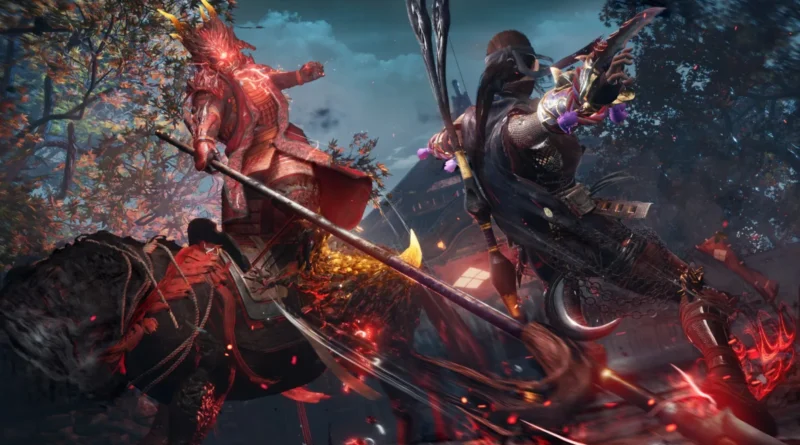
The best way I can describe Nioh 3 to someone who hasn’t played it is this — imagine you took the atmosphere and enemy design of Resident Evil, the precision combat of Sekiro, and the loot obsession of a Diablo game, and then wrapped all of that in feudal Japanese mythology so dark and so visually stunning that you occasionally stop mid-fight just to look at what’s around you. That combination should not work as cleanly as it does. It works completely. Nioh 3 is Team Ninja operating at the absolute peak of their craft, and it is one of the most satisfying action RPGs I have played on PC in years. I came out of my first session thinking I understood what I was dealing with. By hour sixty, I realised I had barely scratched the surface of what this game actually is.
I have been with this series since the first game. Nioh 1 introduced me to Team Ninja’s specific brand of brutality — the Ki pulse system, the stance switching, the enemies that punished every mistake immediately and without sympathy. Nioh 2 refined everything and added the Yokai Shift, which changed the combat in ways I still think about. Nioh 3 takes both of those foundations and builds something that feels like the most complete expression of what this series has always been trying to be. It is harder, deeper, more atmospheric, and more rewarding than either of its predecessors. For a series that was already excellent, that is a genuine achievement.
This is my honest account of sixty hours with one of the best action RPGs of the year.
The Atmosphere Is The First Thing That Hits You And It Never Lets Go
The moment Nioh 3 properly revealed its atmosphere to me was about twenty minutes into the first real area. I had been through the opening — dark corridors, flickering torchlight, something moving in the shadows that I couldn’t quite see. Standard Nioh fare, familiar enough. Then I stepped into the first open environment and stopped moving completely. The world Team Ninja has built for Nioh 3 is genuinely oppressive in a way that most games in this genre never achieve. It is not dark for the sake of being dark. Every environment feels like something terrible happened here recently, and the land itself hasn’t recovered. Twisted trees. Architecture that has been warped by supernatural corruption into shapes that shouldn’t exist. Creatures moving through the fog that look wrong in a specific, considered way that makes your brain uncomfortable before your eyes have fully processed what you’re looking at.
The enemy design is where the atmosphere becomes something truly special. Nioh 3’s Yokai — the supernatural creatures drawn from Japanese mythology that populate the game — are some of the most disturbing and brilliantly designed enemies I have encountered in an action game on PC. They look like something Resident Evil would be proud of. Genuinely unsettling in their design, unpredictable in their movement, and threatening in a way that goes beyond just having high damage numbers. The first time a new Yokai type appeared, and I didn’t immediately understand what it was or how it moved, I felt a specific kind of tension that horror games spend their entire runtime trying to generate. Nioh 3 produces it regularly just through enemy design. That is remarkable.
The sound design supports all of this perfectly. The ambient audio in the darker areas — the distant sounds, the things you hear before you see them, the way the music shifts when something has noticed you — is doing serious atmospheric work throughout. I played with headphones, and there were moments where I heard something I couldn’t locate and immediately slowed down and started scanning the environment rather than pressing forward. That instinctive caution in response to audio is exactly what the best horror-adverse games produce, and Nioh 3 earns it completely.
The Combat Is The Best The Series Has Ever Felt
I played Nioh 3 on PC with Dual Swords, and I want to be specific about that because weapon choice in this game genuinely shapes your entire experience. Dual Swords are fast, aggressive, and reward players who want to stay inside an enemy’s guard and keep the pressure constant rather than waiting for openings from a safe distance. They felt right from my first session,n and by the middle, I had a moveset that felt completely personal — a specific combination of stances, skills, and Ki pulse timing that I had developed over dozens of hours and that no guide had told me to build. That sense of ownership over your combat style is one of the things Nioh does better than almost any other action game.
The Ki pulse system remains the most distinctive thing about Nioh’s combat, but Nioh 3 refines it further. Every attack you make depletes Ki — your stamina equivalent. At the right moment after a c,ombo, you can pulse to recover that Ki and keep your momentum going. Getting that timing right is the difference between a fight feeling controlled and a fight feeling desperate. Early on, ly on I was pulsing inconsistently and running out of Ki at the worst possible moments. By now, twenty, it was completely automatic — a rhythm I had internalised so deeply that I stopped thinking about it and started feeling it. That transition from conscious effort to instinct is the Nioh experience in miniature.
The stance system adds another layer that keeps combat endlessly interesting. High stance hits hard and breaks through enemy guards. Mid stance is balanced and versatile. Low stance is fast and Ki efficient. Every enemy encounter becreal-timeal time assessment of which stance serves you best, and switching between them mid-combo — which the game actively encourages and rewards — creates a fluidity that reminds me of Sekiro at its best. The comparison is not accidental. If Sekiro is about reading and reacting with absolute precision, Nioh 3 is about adapting and flowing with the same precision but across a much wider range of options. Both approaches are demanding. Both are extraordinarily satisfying when they click.
The Yokai Shift Changes Everything
The Yokai Shift system — introduced in Nioh 2 and expanded significantly in Nioh 3 — lets you temporarily transform into a Yokai form using abilities you absorb from defeated enemies. In practice,e this means that every major enemy type you encounter in the game is also a potential power you can add to your combat toolkit. The first time I fully understood the implications of that system — that the terrifying thing that just killed me three times was also something I could become — it changed how I thought about every encounter going forward. Enemies stopped being just obstacles. They became information about what I was going to be capable of.
The Yokai Shift abilities in Nioh 3 are more varied and more impactful than anything in the previous games. Some transform your offensive options completely. Some provide defensive tools that change how you manage the flow of a fight. Some are situationally specific in ways that reward players who think carefully about what they’re going into rather than just running the same build through everything. I swapped my Shift abilities more times in Nioh 3 than in either of the previous entries because the game kept giving me options that genuinely competed with what I already had. That kind of meaningful choice throughout the entire game rather than just at the start is something Team Ninja has built on progressively across the series and Nioh 3 represents their best work with it.
The Boss Fights Are Brutal, Beautiful, and Completely Fair
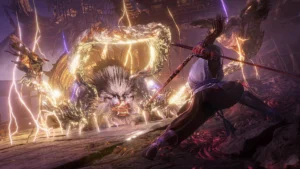
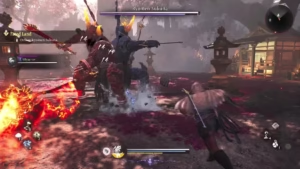
Nioh 3’s boss fights are the best in the series and some of the best I have encountered in any action game on PC. Every major boss is built around the same core philosophy — overwhelming on first encounter, learnable on subsequent attempts, deeply satisfying when you finally crack the pattern. I died to the first major boss seven times. By the seventh attempt, pt I understood every phase, every attack, every window, and I cleared it cleanly. That process of going from feeling completely outmatched to feeling completely in control is what Nioh has always been about, and Nioh 3 executes it more consistently and more spectacularly than either of its predecessors.
The boss’s designs draw from Japanese mythology in ways that feel genuinely considered rather than just aesthetically borrowed. These are not generic fantasy monsters — they are specific, culturally rooted creatures given the kind of visual and mechanical treatment that makes them feel legendary. One mid-game boss in particular stopped me completely when it appeared. The design, the music, the scale of the fight — everything came together in a way that made it feel like a genuinely cinematic moment rather than just a difficulty checkpoint. I sat with that fight for a while after clearing it. Not because it was the hardest thing in the game, but because it was the most impressive.
The Loot System Will Consume You If You Let It
Nioh 3 is an action RPG, and the RPG side of that equation is just as deep as the action side. The loot system — where enemies drop weapons and armour with randomised stats, set bonuses, and special properties — is the kind of system that turns a sixty-hour game into a hundred-hour game without you noticing the transition. I found myself after a difficult boss fight spending twenty minutes going through the items it dropped, comparing stats, reforging properties, and dismantling duplicates for materials. That loop is genuinely addictive in a way that sneaks up on you because for the first few hours, you’re so focused on not dying that the loot almost feels secondary.
By the midgame, it stops being secondary. The difference between a well-optimised build and a mediocre one in Nioh 3 is significant enough that investing time in understanding the loot system pays off directly in combat performance. I spent an evening doing nothing but refining my Dual Swords build — reforging weapon properties, matching set bonuses, adjusting my Yokai Shift to complement my stat spread — and the next session felt noticeably better. That relationship between system investment and in-game reward is one of the things Nioh does exceptionally well, and Nioh 3 is the most refined version of it yet.
It Is Not Perfect — But Close
Nioh 3 is not a flawless game. The story is the area where it falls shortest — it is dense with characters, factions, and historical references that are genuinely interesting if you engage with them deeply,y but easy to lose track of in the middle of trying not to get killed. The narrative never grabbed me the way the combat and atmosphere did, and there were stretches where I was primarily moving through story sections to get back to the next fight rather than because I was invested in what was happening narratively. For a game this strong in almost every other area, rea that the gap is noticeable.
The early hours also have a steeper onboarding curve than they need to. Nioh 3 throws a significant amount of system information at you in a short period, and not all of it is explained clearly enough to stick immediately. I misunderstood how the reforging system worked for longer than I should have because the game assumed more prior knowledge than I had at that point. Series veterans will be fine. Players coming to Nioh 3 fresh may find the first ten hours require more patience than the game explicitly asks for. It is the patience. But the game could do more to earn it.
Final Verdict
Nioh 3 took me around sixty hours on PC for my first full playthrough, though, and I spent probably ten of those hours just in menus refining my build, which tells you everything about what kind of game this is and whether it is for you. If you want an action RPG that demands real skill, rewards genuine system investment, and produces moments of combat satisfaction that few games in the genre can match — this is exactly what you are looking for. The atmosphere is oppressive and stunning in equal measure, the Yokai enemy design is some of the best in any action game available right now, and the combat system is the most refined and rewarding Team Ninja has ever built.
The story could be stronger, and the onboarding could be gentler. Neither of those things stopped me from having one of the best sixty hours I have spent with an action RPG on PC. Nioh 3 is the kind of game that gets inside your head — you finish a session, you close the game, and you are already thinking about the build adjustment you want to try tomorrow. That pull is real, and it does not let go. Team Ninja built something exceptional here. If you have any love for demanding, atmospheric, deeply rewarding action games — do not sleep on this one.
Final Score: 9/10 — Team Ninja’s best game yet. Brutal, beautiful, and endlessly rewarding for players willing to meet it on its own terms.

Hello! I am Mr. Sano Ethan, a content creator, variety gamer, and the driving force behind Kick Of Draft. With over 6 years of hands-on experience across PC, console, and indie gaming,
Submit your review | |