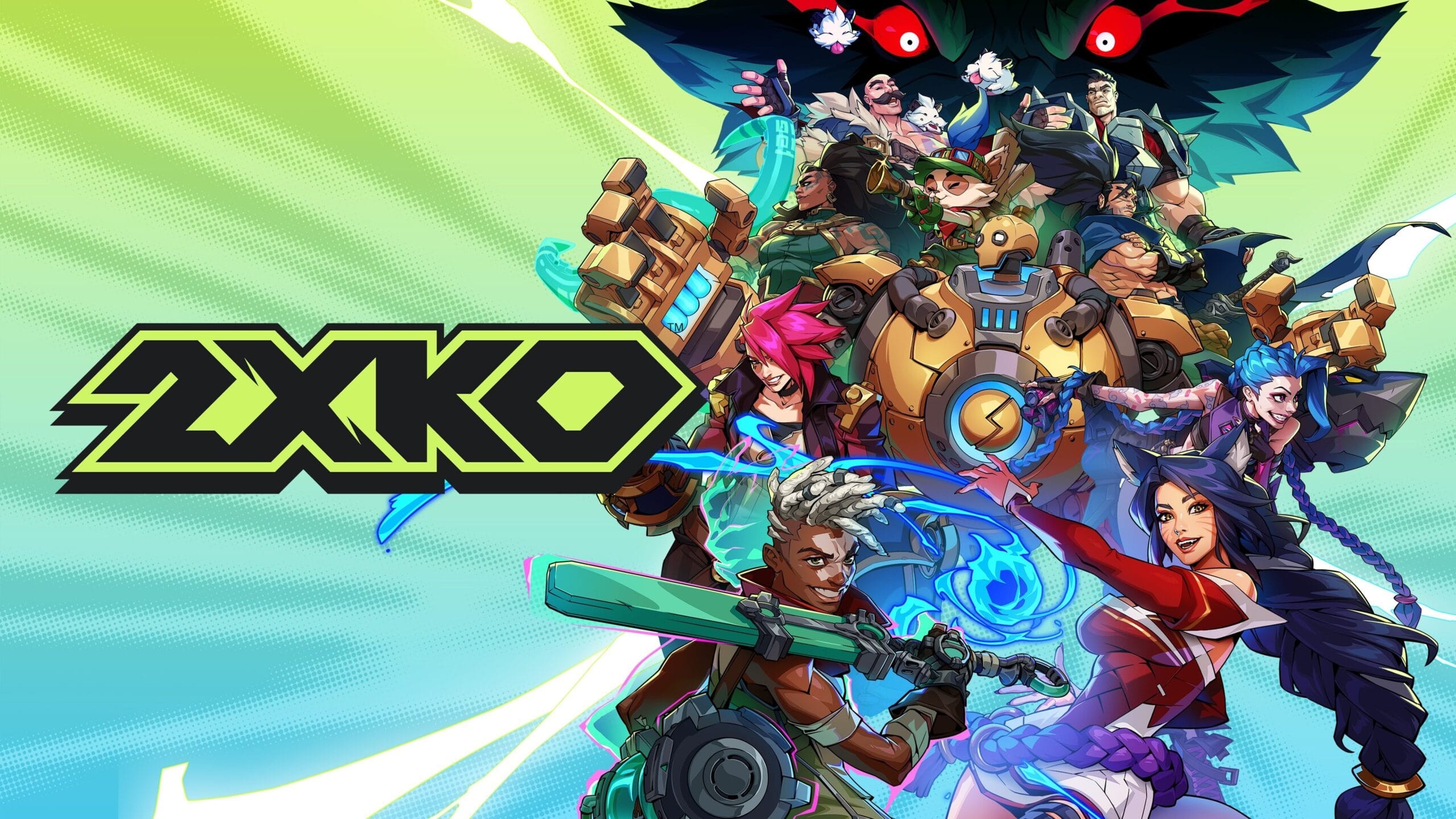
2XKO Review : Riots next Big HIT ?
A Fighting Game That Knows Exactly What It Wants To Be
I’ve been playing League of Legends for years. Thousands of hours across dozens of champions, multiple ranked seasons, the whole thing. I know how Riot builds games the way they think about character identity, the way they approach competitive balance, the way they design systems that feel immediately accessible but take forever to fully master. When 2XKO was announced, I was genuinely excited in a way I hadn’t been about a new Riot title in a while, because fighting games built around champions I already know on a deep level felt like it was made specifically for people like me. I also play The First Descendant regularly,y so I know what it feels like when a game tries to bridge a competitive audience with a casual one and either nails it or completely falls apart trying. 2XKO does not fall apart. It’s the most fun I’ve had with a new Riot game since I started taking Valorant seriously.
Riot stepping into fighting games is a bold move. The genre has its own deeply entrenched community, its own culture, its own legends Street Fighter, Tekken, Mortal Kombat, Marvel vs Capcom. These games have fanbases that have been grinding for decades. A new entry, even from a studio with Riot’s resources and track record, doesn’t automatically get respect. It has to earn it. After spending serious time with 2XKO on PC, I think it earns it — not by trying to beat those games at their own thing, but by doing something distinct enough that it doesn’t need to.
This is a game that knows exactly what it is and commits to it fully. That confidence, more than any individual mechanic, is what makes it work.
Easy To Understand, Difficult To Master
The first thing that hits you when you start playing is how quickly you can get something going. Special moves don’t require the precise quarter-circle inputs that fighting game veterans take for granted, ed but newcomers spend weeks trying to nail. Combos flow more naturally. The tutorial is actually useful rather than being a list of button names with no context. I’ve introduced League friends to fighting games before and watched them give up within an hour because the input barrier felt impossible. 2XKO removes a huge chunk of that barrier without dumbing anything down, and that distinction matters a lot.
Because once the basics are in your hands, you start noticing the depth underneath. The timing windows get tighter. The decision-making gets faster. Positioning, resource management, team synergy, combo routing — all of it starts demanding more from you the better you get. It reminded me of the early League experience,ence actually — you can play your first game and understand what’s happening, but understanding what’s happening and actually being good at it are two completely different things separated by hundreds of hours of learning. 2XKO has that same curve, and it’s one of the healthiest signs the game could show in terms of long-term potential.
I went in comfortable enough with fighting games to skip past the absolute basics, but there were still moments in my first few sessions where I hit a wall and had to genuinely think about what I was doing wrong. That feeling of realising your current ceiling and then working out how to break through it — that’s what keeps competitive games alive. 2XKO has it from the very beginning.
The Tag System Is The Real Star
The tag mechanics are where the game does its best work and where my League brain kicked in most strongly. In League, you’re always thinking about your duo — what your partner brings, how their kit complements yours, what windows open up when you combine your abilities correctly. 2XKO asks you to think about your two-character team in almost the same way. Your partner isn’t just a backup fighter. They’re part of your plan before you even step into a match. The assists they provide, the pressure they create when you tag them in, the defensive options they give you when you’re in trouble — all of it requires the kind of synergy thinking that League players have been doing for years.
That connection made the tag system click for me faster than I expected. I already understood intuitively why certain character combinations work better than others, why you want specific assists in specific situations, and why your second character’s state affects how you play your first. Applying that mental model to a fighting game context felt surprisingly natural. I’m not saying League experience makes you good at 2XKO immediately — the execution demands are completely different — but the strategic thinking transfers in ways that gave me a genuine head start.
The momentum the tag system creates is genuinely thrilling. Matches feel constantly alive even when one character is sitting on the bench. You’re always thinking about your next tag, your resources, the pressure you can create by mixing your characters’ abilities in ways your opponent isn’t expecting. I had one session where I found a specific assist combination that set up a sequence I hadn’t seen anywhere else, and I spent the next hour just running it on different opponents to see how they adapted to it. That kind of discovery is exactly what keeps fighting games interesting long term.
League Champions Feel Right At Home
This is where I had the most personal investment going in and where I’m most qualified to speak. I know these champions. I’ve played hundreds of games on Jinx, I know Ahri’s kit inside out, and I understand what Ekko’s identity is supposed to feel like. Translating characters designed for a top-down MOBA into a 2D fighting game is the kind of challenge that should produce awkward, compromised versions of what made them memorable. Mostly it doesn’t. The team has done a genuinely impressive job of capturing the core of each champion and rebuilding it from scratch in a completely different genre.
Jinx feels chaotic and unpredictable, which is exactly right. Ahri plays with range and repositioning in a way that mirrors how she controls space in League. Ekko’s time mechanic translates into a fighting game context better than it has any right to. Moments were playing these characters where something clicked, and I thought — yeah, that’s them. That recognition is not easy to manufacture, and the development team clearly put serious thought into what makes each champion distinct beyond just their visual design.
Even the voice lines and animations carry the right energy. Champions don’t just look like themselves — they feel like themselves. For a League veteran, that matters more than it probably does for someone coming in fresh. It’s the difference between playing a fighting game that happens to have League characters in it and playing a game that genuinely understands those characters and respects what they mean to the people who have spent years with them.g.
A Visual Style Full Of Energy
Riot’s presentation quality has never really been the question — League, Valorant, Arcane, all of it looks and sounds exceptional. 2XKO continues that trend without question. The character models are expressive, the animations are smooth in a way that makes every exchange feel deliberate, and special attacks hit the screen with the kind of visual impact that makes even a basic combo feel like a statement. It’s the most visually exciting fighting game I’ve played on PC in a while.
What impressed me more than the spectacle was the readability. Tag fighters can turn into visual chaos very quickly — multiple characters, assists flying in, projectiles, special effects all layering on top of each other until you can barely track what’s happening. 2XKO manages this better than most. There are moments where the screen gets genuinely busy, but they’re rare enough that it never becomes a real problem. You can actually follow what’s happening, which sounds like a low bar but is genuinely hard to clear in this genre when the action gets intense.
The Joy Of Experimentation
The part of 2XKO I’ve spent the most time in since launch is just experimenting with team combinations. I have a main already — a pairing that suits how I naturally want to play — but the pull to try new things is constant. Different assists open up completely different approaches. Some combinations I’ve tested have genuinely surprised me with what they enable. A couple have been disasters that taught me something anyway. That cycle of curiosity, discovery, and refinement is something I recognise from years of playing Riot games, and it’s deeply satisfying to find it here in a completely different genre context.
The game rewards the kind of player who wants to understand systems rather than just memorise responses. If you’re willing to spend time in training mode, willing to think about why something isn’t working rather than just blaming the game, an willingg to genuinely explore what your character combination is capable of, 2XKO keeps giving you new things to find. That depth is what separates fighting games that are fun for a week from ones that hold communities together for years. Based on what’s already here, this one has the potential for the latter.
Not Everything Lands Perfectly
It’s not flawless. The accessibility that makes the game welcoming to newcomers occasionally creates a slightly jarring experience when you first step into higher-level matches, a nd the gap between what you can do and what experienced players are doing becomes very clear very fast. That gap exists in every competitive game — it’s part of the genre — but 2XKO’s gentle onboarding can make it feel more sudden than it needs to. If you come in expecting the welcoming tutorial version of the game to reflect competitive play, the first time a properly skilled opponent takes you apart will be a shock.
The roster, while solid, is also clearly just the beginning. Several champions are immediately compelling, and the variety between playstyles is already decent, but as a League player looking at the full champion roster and then looking at what’s available in 2XKO, I’m acutely aware of how much potential is still sitting on the table. That’s not a criticism exactly — roster expansion taktimetim,e and the existing lineup is well-built — but if you’re used to the breadth of choice League offers,r s it’s something you’ll feel.
Balance is the long-term question that won’t be answered for a while. Riot has shown in League that they can manage competitive balance at scale over many years, though not without regular controversy along the way. Tag fighters in particular have a history of developing dominant team compositions that warp the meta around them. How Riot handles that when it inevitably emerges in 2XKO will tell us a lot about whether this game has genuine staying power or just a strong launch window.

Built For The Long Run
What keeps coming back to me when I think about 2XKO is how much it reminds me of early League. Not in the specific way it plays, but in the feeling of it — a game that clearly has a long-term vision, that is building systems and community infrastructure with the intention of this being around for years rather than months. Riot doesn’t make games;mes they plan to shut down quickly. They make games they plan to grow. Valorant proved they could transfer that approach from League to a completely different genre. 2XKO suggests they can do it again…
As someone who has invested serious time in multiple Riot titles,les I’m genuinely invested in where this goes. The foundation is strong enough that the future feels exciting rather than uncertain. More champions, more balance patches, more systems refinement, a competitive scene that grows as the playerbase develops — if Riot gives this game the long-term support they’ve given their other titles, 2XKO could become something genuinely significant in the fighting game space.
Verdict
2XKO is the best new fighting game I’ve played in a while and the most fun I’ve had with a Riot title since I got serious about Valorant. As a League v I’mran the champion translation alone was worth the price of entry — watching characters I know deeply get rebuilt for a completely different genre and mostly land correctly is genuinely impressive work. The tag system is creative and deep, the accessibility is real without being a compromise, and the feel of the game is polished enough that it holds up against genre heavyweights rather than just being a good effort for a first attempt.
The roster will grow, balance will get tested, and the competitive scene is still early. None of that changes how good the foundation is right now. If you’re a League player who has been curious about fighting games but never found the right entry point — this is it. If you’re a fighting game veteran who wants something fresh without abandoning,pth — give it serious time before you judge it. And if you’re neither of those things and just want a genuinely exciting game, oh, oh — 2XKO is that too.
Final Score: 8.5/10 — Riot’s most ambitious new genre entry yet, and their best first attempt since Valorant. Built to last.
We’ll be covering every new update on kickofdraft.com as it drops — release date, new trailers, gameplay details, indie hits.
Play Now.


Hello! I am Mr. Sano Ethan, a content creator, variety gamer, and the driving force behind Kick Of Draft. With over 6 years of hands-on experience across PC, console, and indie gaming,
Submit your review | |
Pingback: The Witcher 3: Wild Hunt Review — The Open World RPG That Set The Standard For Everything That Came After It - Kick Of Draft
Zaproxy dolore alias impedit expedita quisquam.