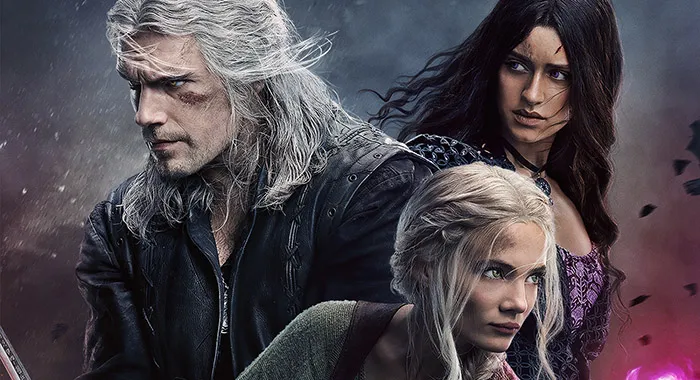
The Witcher 3: Wild Hunt Review — The Open World RPG That Set The Standard For Everything That Came After It
The Witcher 3: Wild Hunt Review — The Open World RPG That Set The Standard For Everything That Came After It
I want to tell you about a side quest. Not the main story. Not a major story beat. A side quest — one of hundreds in this game — called The Bloody Baron. It starts simply enough. You’re looking for someone, you need information, and a local warlord called the Baron has it. You go to talk to him expecting a transaction — give me what I need and I’ll move on. What you get instead is one of the most emotionally complex storylines I have experienced in any game on PC. A story about a broken family, addiction, violence, regret, and the impossibility of simple answers to complicated situations. It takes hours to fully resolve. Every decision you make in it has consequences you feel later. And it is a side quest. Not the main story. A side quest. That is The Witcher 3. That is what CD Projekt Red built. And once you understand that this level of quality exists across hundreds of hours of content — you understand why this game changed what people expected from open world RPGs permanently.
I went into The Witcher 3 on PC knowing the broad reputation — massive open world, great story, Game of the Year everything. I came out the other side around 100 hours later understanding that the reputation had actually undersold it. This is not a game that is great for an open world RPG. It is a great game. Full stop. The open world is almost incidental to that greatness — it is the container, not the content. The content is the writing, the characters, the decisions, and the way every single one of them feels like it matters.
Let me tell you exactly what those 100 hours felt like.
Geralt of Rivia — The Best Protagonist In RPG History
You play as Geralt of Rivia — a Witcher, which means a mutated monster hunter for hire who has been trained since childhood to feel less than a normal human being and has developed a dry, deadpan worldview as a result of centuries of seeing the worst of both monsters and people. Geralt is one of the greatest protagonists in gaming and the reason he works so well is that he is not a blank slate. He has opinions. He has history. He has relationships that existed long before you started playing. You are not creating a character from scratch the way you do in Baldur’s Gate 3 — you are stepping into someone else’s life midway through and learning who that person is as you go. That approach creates a protagonist with genuine weight and presence that most RPGs never come close to achieving.
The main story follows Geralt searching for Ciri — his adopted daughter, a person of extraordinary power who is being hunted by a group of otherworldly beings called the Wild Hunt. The story is personal in a way that most RPG main quests aren’t. The fate of the world is technically at stake but you never really feel like you’re saving the world. You feel like you’re trying to find your kid. That emotional grounding makes every major story beat land harder than it would in a more traditionally epic framing and it gives Ciri’s sections of the game — where you play as her directly — a weight that is difficult to fully prepare for.
The World Is The Most Convincing Open World Ever Built
The Witcher 3’s open world is the best I have experienced in any game on PC and I say that having played a lot of open world games. The reason it works where so many others don’t is that it feels like a world rather than a map. Every village has a reason to exist. Every NPC has somewhere to be. The poverty and violence and political complexity of the world bleeds into every environment in a way that makes it feel genuinely lived in rather than constructed as a backdrop for gameplay. You walk through a village that has been caught between two armies and you understand immediately — from the destroyed buildings, the missing people, the conversations of those who remain — exactly what happened there and what it cost.
Velen is one of the greatest areas in any open world game ever made. A grey, muddy, war-ravaged marshland full of desperate people making terrible decisions to survive — it is relentlessly bleak and completely compelling. Novigrad is a dense, living city full of political intrigue, criminal organisations, and the kind of street-level detail that makes you want to explore every alley. Skellige is a Nordic archipelago of islands with a completely distinct culture, mythology, and visual identity that feels like a different game entirely while still being coherent within the same world. Each area is so fully realised that moving between them feels like genuine travel rather than just loading a different biome.
The Combat Rewards You For Learning It Properly
I played with a sword and sign build — heavy investment in fast attack damage combined with the Igni sign, which lets you throw fire at enemies. Early on the combat felt slightly clunky in a way that I pushed through because everything else was holding my attention. By the midgame it had opened up into something genuinely satisfying — fluid, tactical, and demanding enough that harder difficulty encounters felt like real tests rather than stat checks. The key is learning to use everything available to you rather than just swinging swords and hoping for the best.
The sign system is the most interesting part of Geralt’s combat toolkit. Igni burns groups of enemies and staggers them. Aard blasts enemies backward and knocks them off balance. Quen creates a shield that absorbs damage. Yrden traps enemies in a slow field. Axii lets you mind control a single target. Learning which sign applies to which situation and combining signs with sword attacks and bombs and oils creates a combat system with far more depth than it appears to have from the outside. My Igni build destroyed most human enemies and struggled with certain monster types in a way that forced me to adapt — which is exactly how a build-based combat system should work.
The monster contracts are where the combat reaches its peak. These are specific hunts where you track a named creature, research its weaknesses, craft the appropriate oils and potions, and then fight it with full preparation. The preparation matters — fighting a bruxa without silver oil and Black Blood potion is significantly harder than fighting one with both. That loop of investigation, preparation, and execution is one of the most satisfying gameplay cycles I’ve experienced in an RPG and it never gets old across the full length of the game.
The Characters Are Unforgettable
Ciri is my favourite character in The Witcher 3 and possibly one of my favourite characters in any RPG I have played. She is introduced through other characters’ memories and stories before you ever see her directly — you build a picture of who she is through Geralt’s desperation to find her and the reactions of everyone who has encountered her. When you finally reach her and play as her directly, she is completely worth the wait. Fast, powerful, reckless, funny, and carrying more emotional weight than she lets on — Ciri’s sections of the game are some of the best hours in it and her relationship with Geralt is the emotional backbone of the entire story.
The Yennefer versus Triss question is something every Witcher player has an opinion on and mine is Yennefer without hesitation. Triss is warm, accessible, and easy to like. Yennefer is difficult, challenging, and equal to Geralt in a way that makes their relationship feel genuinely complex rather than just romantic. She doesn’t need Geralt and doesn’t pretend to. That dynamic produces better scenes, better tension, and a more interesting story than the safer option. I understand why people choose Triss. I think they’re wrong.
Beyond Geralt’s main relationships the supporting cast is stacked. Dandelion is consistently funnier than he has any right to be. Zoltan is exactly the kind of dependable friend every story needs. The Bloody Baron is one of the most fully realised side characters in any game — a villain and a victim simultaneously, in a way that never resolves cleanly and shouldn’t. Even minor characters who appear for a single quest are written with enough specificity to feel real. That consistency of quality across hundreds of hours of content is the thing that still impresses me most about this game.
Every Decision Feels Real Because Every Decision Has Consequences
The Witcher 3 does not have a good ending and a bad ending. It has endings that feel earned or unearned based on the cumulative weight of hundreds of decisions made across hundreds of hours. The choices that determine Ciri’s fate are not dramatic binary decisions presented as obviously important — they are small moments scattered across the entire game that you might not even register as significant when they happen. How you treat her in a quiet conversation. Whether you let her make her own decisions or try to protect her from everything. Whether you fight alongside her or do the hard thing and step back. Those choices add up and the ending they produce feels completely specific to the playthrough you had rather than a preset outcome triggered by a final choice.
I got an ending that genuinely surprised me. Not because it was unexpected given my choices — looking back it was the only ending those choices could have produced. But because the game had been building to it so quietly and so patiently across 100 hours that when it arrived it hit harder than I was prepared for. That is extraordinary storytelling and extraordinary game design working together in a way that very few games ever manage.
The DLC Is Better Than Most Full Games
Hearts of Stone and Blood and Wine are the two major expansions and both of them are worth discussing because both of them are exceptional. Hearts of Stone introduces Gaunter O’Dimm — one of the best written antagonists in any game I have played on PC. A deal-making entity of enormous and ambiguous power who speaks softly and means everything he says in the worst possible way. His presence across Hearts of Stone creates a tone that is completely distinct from the main game — darker, stranger, and genuinely unsettling in a way the main story never quite reaches.
Blood and Wine takes the opposite direction. Set in Toussaint — a sun-drenched, wine-soaked, fairy tale duchy that looks nothing like the grey war-torn world of the main game — it is a story about chivalry, friendship, betrayal, and growing old. It is the most visually beautiful area in the game and it gives Geralt something the main game doesn’t quite get around to giving him — a home. An actual place to rest and exist between adventures. The emotional note it ends on is the most affecting conclusion to an expansion I have experienced in an RPG and it serves as a genuinely perfect send-off for Geralt as a character. If the base game is essential then both expansions are mandatory. There is no reason to play The Witcher 3 without them.
Final Verdict
The Witcher 3 took me around 100 hours on PC for the main story and both expansions and I was engaged for almost every single one of them. I went in as Geralt, built around fast attacks and Igni signs, chose Yennefer, fell completely in love with Ciri’s story, had my heart broken by the Bloody Baron questline, and came out the other side understanding exactly why this game sits at the top of so many people’s all-time lists. It earns every bit of that reputation and then some.
The open world is the most convincing ever built. The writing is the best in the genre. The characters are unforgettable. The decisions feel real because they are real — not in a mechanical sense but in an emotional one, in the sense that the weight of them follows you through the entire game and shapes the ending you get in ways you only fully understand looking back. The Witcher 3 is not just one of the best RPGs ever made. It is one of the best games ever made. A decade on from release it still has no real equal. Play it. Both expansions included. All 100 hours of it. You will not regret a single one.
Final Score: 10/10 — A masterpiece of open world design, character writing, and consequential storytelling. One of the greatest games ever made. Non-negotiable.
Hello! I am Mr. Sano Ethan, a content creator, variety gamer, and the driving force behind Kick Of Draft. With over 6 years of hands-on experience across PC, console, and indie gaming,