Undertale Review: 5 Reasons It’s The Most Incredible RPG Ever Made
Undertale Review: The Game That Made Me Realise I Never Actually Knew What An RPG Could Be
I need to tell you something before this review starts. Undertale is my favourite game of all time. Not top five. Not the top three. Number one. Above everything else I have ever played on PC, above every game that has made me emotional or kept me up until 3 am or refused to leave my head for weeks after I finished it — Undertale sits at the top of that list alone, and it has never once been challenged for that position. I have completed all three routes. I have heard almost every piece of music in the game. I know these characters the way you know people who have genuinely affected your life. And every single time I think about this game seriously — what it is, what it does, what it says — I feel something that I cannot fully put into words. I am going to try anyway because this game deserves every word I can give it.
Undertale was made almost entirely by one person. Toby Fox — composer, writer, designer, developer — built this game largely by himself and released it in 2015 for a price that was embarrassingly low for what it contained. It looks simple. Pixel art, basic animations, and a combat system that appears straightforward from the outside. None of that is what Undertale actually is. Undertale is one of the most emotionally intelligent, mechanically original, and genuinely surprising pieces of interactive storytelling ever created. It just hides all of that behind a look that makes you think you know what you’re getting into. You don’t. Nobody does until they’re already inside it.
This is my honest account of why it is the greatest game I have ever played.
You Don’t Have To Kill Anyone. That Changes Everything.
Every RPG I had played before Undertale worked the same way. You encounter enemies. You fight them. You win. You get experience points. You level up. You get stronger. You fight stronger enemies. You level up again. That loop is the foundation of the entire genre, and I had accepted it so completely that I never thought to question it. Undertale questioned it on my behalf. In Undertale, you can choose not to kill a single monster across the entire game. Not as a difficulty setting, not as a cosmetic choice — as a genuine, fully developed alternative path with its own story, its own consequences, its own ending, and its own emotional payoff that is completely different from what happens if you do choose to fight. The game calls this the Pacifist route, and it is one of the most radical design decisions I have ever encountered in a video game.
But Undertale doesn’t stop there. It also offers the Genocide route — where you hunt down and kill every single monster in every area until nothing is left. And then it does something with that choice that I am not going to spoil because discovering it is one of the most important experiences this game offers. What I will say is that Undertale takes your decision to pursue that path completely seriously. It does not treat it as just another ending. It treats it as a statement about who you are as a player — and then it responds to that statement in a way that no other game I have played has ever done. The Genocide route broke something in me. I mean that in the best and worst possible way simultaneously.
Playing all three routes back to back across my time with Undertale gave me three completely different emotional experiences from the same game. That should not be possible. Toby Fox made it possible. The fact that a game this small in scope and this simple in presentation can produce that range of experience is something I still think about years later.
The Characters Are The Whole Game
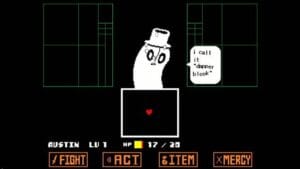
Undertale’s characters are the reason I fell in love with it. Not the mechanics, not the meta-narrative cleverness, not the way it subverts RPG conventions — all of that is extraordinary,ry but it works because of the characters it’s built around. Toriel is one of the warmest and most immediately lovable characters in gaming. Papyrus is so genuinely pure of heart that his enthusiasm becomes one of the most endearing things in the game. Undyne is loud and fierce and completely committed to everything she does, and somehow by the end of her arc,c she is one of the most moving characters in the whole story. Sans delivers what is possibly the most effective single boss fight I have experienced in terms of emotional weight. I am not going to say anything more about that fight. You need to experience it without warning.
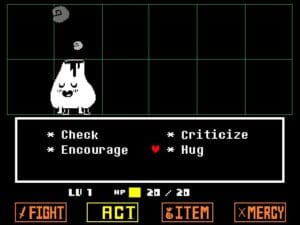
But my favourite character in Undertale — the one I think about most, the one that represents something unique about what this game understands about people — is Napstablook. The little ghost you meet very early, who is lying on the floor listening to music and apologising for existing. Napstablook is melancholy and gentle and slightly awkward and completely sincere in a way that hit me harder than I expected. There is a moment where you can lie on the floor next to Napstablook and just feel terrible together for a while — and the game scores that moment with music that is so perfectly matched to the feeling of it that I stopped doing anything and just sat with it. That moment is maybe two minutes long. It is one of my favourite moments in any game I have ever played. Toby Fox understood something about loneliness and gentleness in that scene that most games never come close to.
What makes every character in Undertale extraordinary is that none of them is what they appear to be on the surface. The game gives you just enough on the first meeting to form an impression and then systematically and lovingly dismantles that impression over the course of the story. Characters who seem simple reveal extraordinary depth. Characters who seem threatening reveal extraordinary pain. Characters who seem minor turn out to be carrying some of the heaviest emotional weight in the entire narrative. Undertale trusts you to pay attention and rewards that attention constantly.
The Story Made Me Cry Multiple Times, And I Have Zero Regrets About That
Undertale’s story begins simply. You are a human child who falls into the Underground — a world beneath the surface where monsters live, sealed away from humanity by a magical barrier. You need to find your way home. That is the premise,e and in the hands of a lesser writer it would stay exactly that simple. In Toby Fox’s hands, it becomes something that expands slowly and quietly until it is carrying far more emotional weight than you were prepared for. The history of the Underground, the war between humans and monsters, the specific tragedy of what happened to bring things to the state they’re in when you arrive — all of it unfolds through characters and conversations and small environmental details rather than exposition dumps, and the result is a world that feels genuinely real despite its pixel art simplicity.
I cried at Undertale. More than once. The Pacifist ending produced a reaction in me that I was not expecting and have not fully recovered from. The way it resolves the stories of characters you have spent the whole game getting to know — the care and the warmth and the genuine love Toby Fox clearly has for every single one of them — comes through in those final moments in a way that got me completely. And then the Genocide route ending hit me in an opposite emotional direction, and that got me too, differently, more uncomfortably, in a way that left me sitting quietly for a while afterwards. A game that can produce both of those reactions across different playthroughs is doing something genuinely special.
The Music Is Some Of The Greatest Ever Written For A Video Game
Toby Fox composed the entire Undertale soundtrack himself,lf and it is one of the greatest video game soundtracks ever made. I say that without any qualification or hedging. The music in Undertale does things that most composers working with full orchestras and unlimited budgets never achieve — it creates emotional context, it builds character, it foreshadows things you won’t understand until later, and it hits at specific moments with a precision that feels almost unfair. Certain tracks are attached to moments in the game so strongly that hearing them outside of it immediately brings everything back.
I still listen to the Undertale soundtrack. Not occasionally — regularly. Napstablook’s theme, Ruins, Hopes and Dreams, Megalovani, and His Theme — these are tracks that have lived in my regular playlist for years because they are genuinely that good as pieces of music separate from the game they’re attached to. The way the soundtrack builds, references, and recontextualises itself across the full game is something you only fully appreciate on a second or third playthrough when you start noticing all the connections. There is a moment late in the Pacifist route where a piece of music arrives,s and if you recognise where it comes from and what it means — and by that point you will — it is one of the most emotionally devastating things I have experienced in a game. Toby Fox built that moment with music. One person. One soundtrack. Extraordinary.
It Reinvented What An RPG Is Allowed To Be
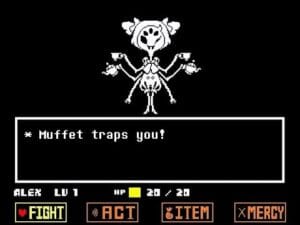
The thing I keep coming back to when I think about why Undertale is my favourite game is how genuinely new it felt. I had played RPGs before. I understood the genre. And Undertale came along and showed me that everything I thought the genre required — the levelling, the grinding, the combat as a mandatory progression system — was a convention, not a rule. You do not have to kill monsters. You can befriend them. You can spare them. You can learn who they are and what they wa,nt and resolve conflicts without violence, and the game treats that choice with complete sincerity rather than as a novelty or a gimmick. It is a fully developed alternative to the entire foundation of the RPG genre, and it works completely.
That concept sounds simple when you describe it. In practice, it produces something genuinely profound. Every monster you encounter has a personality, a name, and a reason they’re fighting you. The combat system — where you dodge attacks in a small box while choosing whether to Fight or Act — becomes a puzzle about understanding who you’re dealing with rather than just a damage calculation. Learning how to spare each enemy involves figuring out what they need, what makes them laugh, and what calms them down. It is the most human approach to RPG combat I have ever seen, and it comes from a pixel art game made by one person that costs less than a cinema ticket.
Do All Three Routes. I Mean It.
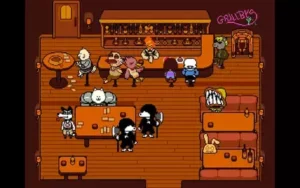
Undertale has three main routes, and you should do all of them. The Pacifist route first — always first. It is the most complete version of the story, and it is the one the game wants you to experience as your introduction. Then the Neutral route to understand the middle ground. Then the Genocide route — and I want to be careful here because this route is not for everyone,ne and the game will tell you that in its own way as you pursue it. It is dark, uncomfortable, and deliberately unpleasant in completely intentional ways. It is also one of the most important things you can do in Undertale because of what it says and what it does to your understanding of everything that came before it.
I did all three. Each one gave me something completely different. The Pacifist ending gave me warmth and tears. The Genocide route gave me something closer to genuine unease that I still think about. The Neutral route sits between them and fills in gaps in the story that neither extreme covers fully. Together, they make Undertale one of the most complete and layered experiences I have had in a game on PC. Separately,y each one is still worth your time. Together,e r they are something I cannot fully compare to anything else.
Final Verdict
I want to say something to anyone reading this who hasn’t played Undertale yet. You have to play it. Not because it is technically impressive or because it has the biggest budget or the most content. You have to play it because it gives you one of the most genuinely real and genuinely new RPG experiences that exists in gaming. You don’t have to kill monsters and level up and become stronger and kill more monsters. You can befriend the monsters. You can choose kindness over violence, once, and the game takes that choice completely seriously and builds an entire world around it. That concept is so simple and so radical at the same time that it sounds almost too good to be true. It isn’t. It is exactly that good. It is beautiful.
Undertale made me cry. It made me laugh. It made me feel genuinely uncomfortable with my own choices in a way I wasn’t prepared for. It gave me Napstablook lying on the floor listening to music and a two-minute moment of just feeling things quietly that I will carry with me forever. It gave me a soundtrack I still listen to years later. It gave me characters I think about like people I have actually known. It is made by one person, it looks simple, it costs almost nothing, and it is the greatest game I have ever played. That is not a statement I make lightly. I mean every word of it.
Final Score: 10/10 — The greatest RPG ever made. A game that reinvented what the genre is allowed to be and then filled that reinvention with characters, music, and story that will stay with you long after you finish it. Essential. Unmissable. Perfect.

Hello! I am Mr. Sano Ethan, a content creator, variety gamer, and the driving force behind Kick Of Draft. With over 6 years of hands-on experience across PC, console, and indie gaming,
Submit your review | |