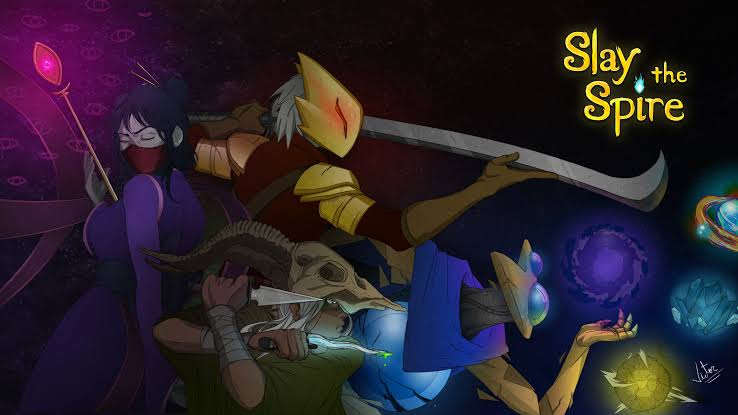
Slay the Spire 2 early access review
Early Access Notice:
This review is based on Slay the Spire 2’s current early access build. The game is still in active development. Features, balance, and content may change significantly before the final release. This review reflects the experience as of May 2026.
Years of refinement and careful design evolution shape this deceptively familiar sequel into something far more impressive than it initially appears. While the new mechanics and additions certainly make an impact, the game’s greatest strength comes from its complete confidence in its own identity. It fully understands what makes its eccentric brand of card-based strategy so compelling and leans into that chaos with remarkable precision. Beneath the familiar structure is a sharper, more polished experience that constantly rewards experimentation, calculated risk, and ruthless decision-making. Few games make cruelty feel this satisfying, strategic, and unexpectedly enjoyable.
I had genuine concerns about Slay the Spire 2 before its early access launch because, at first glance, everything about it looked extremely similar to the original game. Sure, there were visible differences here and there, but initially they didn’t seem substantial enough to justify an entirely new sequel. In the back of my mind, there was always that lingering question: had Mega Crit simply run out of ideas? Thankfully, after spending time with the game, it’s clear that couldn’t be further from the truth — and I’ve rarely been happier to be proven wrong.
What first appeared to be small, almost surface-level improvements actually reveal themselves to be far more meaningful in practice. Take the visual presentation, for example. In screenshots alone, Slay the Spire 2 can look deceptively familiar, but once everything is in motion, the difference becomes immediately obvious. The game feels dramatically more alive than its predecessor.
Enemies now move with far more personality and detail. Fish-like creatures twist and wriggle through the air as though they’re swimming underwater, shadows curl and flicker around corrupted enemies, glowing eyes pulse with magical energy, and almost every environment feels filled with subtle movement and atmosphere. There’s a constant sense that the world is breathing around you. Despite these upgrades, though, the sequel still retains the charming, handmade aesthetic that gave the original game so much personality.
The biggest improvements, however, come through the game’s new characters and mechanics. While additional playable characters aren’t entirely new for the series (RIP The Watcher, who doesn’t return here), the newcomers in Slay the Spire 2 feel genuinely inventive. The Regent and The Necrobinder don’t just introduce fresh decks; they fundamentally change the way the game can be played.
These characters bring entirely new strategic ideas into the formula, including summonable companions like floating swords and giant skeletal hands that actively influence combat encounters. New mechanics also dramatically alter how players approach battles. One standout addition is Doom, a reverse-style damage system that gradually increases over time and instantly kills enemies once their health drops beneath its threshold.
There’s also an entirely new resource system involving Stars, effectively giving players access to a second energy pool alongside the traditional one. When used correctly, this mechanic opens up some incredibly powerful combinations and creates even deeper layers of strategy during runs.
All of these additions combine to make Slay the Spire 2 feel far more ambitious than it first appears. Underneath its familiar exterior is a sequel packed with meaningful experimentation, smart refinements, and enough fresh ideas to completely justify its existence.

The Regent and the Necrobinder are also arguably the most visually expressive characters the Slay the Spire series has introduced so far. The Necrobinder floats eerily through battles alongside her strangely adorable Thing-like skeletal hand companion, Osty, giving her entire playstyle an unsettling but charming personality. Meanwhile, the Regent radiates pure arrogance, lounging cross-legged atop a massive throne carried by two exhausted servants while casually resting his head against his fist as though the entire climb up the Spire is beneath him. The sheer nonchalance of it all is fantastic. Both characters ooze personality in ways the series hasn’t quite achieved before.
Then there’s multiplayer — perhaps the sequel’s most transformative addition overall. Cooperative play completely changes the dynamic of Slay the Spire, allowing up to four players to tackle the Spire together. And surprisingly, it feels incredibly natural, almost as though the game was always meant to work this way.
The strategic possibilities multiplayer introduces are enormous. Players can coordinate deck builds to complement one another, use multiplayer-specific cards to provide buffs and support, and create synergies that simply weren’t possible in the original game. More importantly, though, the experience fundamentally changes because you’re no longer facing the Spire alone.
It sounds simple on paper, but the execution is remarkably polished. Everything feels smooth, responsive, and intuitive. Tiny details elevate the experience even further, like seeing another player’s pointing hand while deciding who should claim a relic chest reward, or scribbling notes directly onto the map while planning routes together. These small touches add personality and make multiplayer feel genuinely collaborative rather than tacked on as an extra feature.
Honestly, multiplayer alone might explain why Slay the Spire 2 has already become such a dominant presence on Steam’s most-played charts.
But beyond all the flashy additions, new mechanics, and co-op systems, there’s something even more impressive quietly holding the entire experience together: confidence born from experience. While Slay the Spire 2 doesn’t radically reinvent the formula, it constantly feels like the work of a studio that has spent years carefully studying exactly why the original game resonated so strongly with players.
Mega Crit clearly understands every pressure point, every psychological hook, and every tiny moment of tension that makes the series so addictive. The sequel feels less like experimentation for experimentation’s sake and more like the result of years spent refining, observing, and mastering the craft behind one of the greatest deckbuilders ever made.
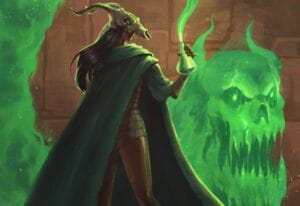
What Makes Slay the Spire So Addictive
Let’s step back for a moment because there’s a good chance some people still don’t fully understand what a Slay the Spire experience actually is — or why this particular style of card game became so influential in the first place.
At its core, Slay the Spire is a roguelike deck-building game. More accurately, it’s the roguelike deck-building game — the title that essentially launched an entire subgenre and inspired countless imitators over the years.
The concept itself sounds deceptively simple. You choose a character and attempt to climb a massive spire filled with enemies, elite encounters, bosses, events, and increasingly difficult decisions. Combat plays out entirely through cards, with each card tied to attacks, defense, buffs, debuffs, status effects, or special abilities unique to your chosen character.
After every battle, players are rewarded with new cards to potentially add to their deck, slowly shaping their build run by run. Over time, weak starter decks evolve into highly specialized combinations capable of ridiculous synergy and devastating power — assuming you survive long enough to create them.
The catch, of course, is that death sends you all the way back to the beginning. Like all great roguelikes, every run in Slay the Spire is temporary, and failure is inevitable. But even failed runs feel rewarding because players constantly unlock new cards, relics, mechanics, and opportunities that make future attempts more interesting and potentially more successful.
That endless cycle of experimentation, risk, adaptation, and progression is what makes Slay the Spire so captivating. Every decision matters, every card choice can completely alter a run, and every victory feels earned through strategy rather than luck alone.
The Endless Pursuit Of Becoming Overpowered
The real magic of Slay the Spire comes from its incredible balance between unpredictability, brutal challenge, and the constant temptation to completely break the game in your favour. At its best, the experience feels like controlled mathematical chaos — a gradual climb toward that exhilarating moment when a run suddenly clicks into place and everything that once destroyed you is now effortlessly destroyed by you instead.
That pursuit of overwhelming power is what makes the game so addictive. Every run constantly dangles new possibilities in front of players, forcing them to weigh risk against reward at almost every step. Do you take on an elite encounter for the chance to earn a powerful relic even though it could end your run instantly? Do you sacrifice healing at a Rest Site just to upgrade a single card that might become the centerpiece of your entire build?
Every decision feels dangerous. Every reward feels earned. You are constantly balancing on the edge between disaster and domination.
Slay The Spire 2 Builds On The Original Formula
At its core, Slay the Spire 2 still follows the same foundational structure that made the original so compelling, but the sequel layers in enough fresh ideas to make the experience feel meaningfully expanded rather than simply repeated.
There are new mechanics throughout, including a fresh divination mini-game that offers additional rewards and strategic opportunities during runs. Naturally, there are also countless new cards and relics to discover, dramatically increasing the number of possible build combinations players can experiment with.
Even returning character classes like The Ironclad, The Assassin, and The Defect have been reworked and refreshed in subtle but impactful ways. They aren’t entirely reinvented, but there’s enough change beneath the surface to make revisiting them genuinely exciting again rather than simply familiar.
The New Godlike Encounters Are Brilliant
One of the sequel’s strongest additions comes through the strange godlike beings players now encounter at the start of each Act. These interactions expand on the original game’s beloved opening encounter with Neow, the giant many-eyed whale mascot who grants players powerful starting boons before each run begins.
In Slay the Spire 2, Neow is no longer alone.
At the beginning of later Acts, players encounter an increasingly bizarre collection of mysterious entities, including a living rainbow, a melting dragon, a scarecrow, and several other wonderfully surreal figures. Each one offers strange blessings, game-changing mechanics, or wildly unconventional rewards that can dramatically alter the direction of a run.
It’s a brilliant evolution of the original system because these encounters feel far more dynamic and memorable than simply receiving a static pile of loot after defeating a boss.
The presentation of these moments is fantastic as well. Every encounter bursts with imaginative artwork, vibrant colors, and eccentric personality, making each interaction feel mysterious and important. More importantly, the rewards themselves are genuinely exciting and often absurdly powerful.
One boon might allow players to reroll every future card reward once. Another could hand over 999 gold immediately. Some introduce entirely new gameplay systems, like Cooking at Rest Sites instead of simply healing or upgrading cards.
These aren’t safe or predictable upgrades. They’re the kind of chaotic, high-impact decisions that perfectly capture why Slay the Spire remains so compelling in the first place.
Vakuu Is The Kind Of Chaos Only Slay The Spire Could Create
The godlike encounter that already feels destined to become legendary — or at the very least an endless source of memes — is Vakuu, a horrifying demon resembling a grinning, half-starved corpse. Among all the bizarre entities in Slay the Spire 2, Vakuu immediately stands out because of the terrifying price attached to his rewards.
In one of my recent runs, Vakuu offered an extra point of energy every single turn. In Slay the Spire, where players normally only begin with three energy, that kind of bonus is absurdly powerful and potentially run-defining. But naturally, there’s a catch.
If you accept the deal, Vakuu takes control of your first turn in every battle for the remainder of the run, automatically playing your opening hand for you.
It’s such an outrageous mechanic that it almost feels impossible that the developers actually implemented it. I genuinely cannot remember another card game willing to take a risk this strange, especially in a game as carefully balanced and brutally punishing as Slay the Spire 2.
And yes, I absolutely accepted the deal.
That willingness to experiment with mechanics that feel slightly dangerous, unpredictable, and almost unhinged is exactly what separates Slay the Spire 2 from countless other deckbuilders trying to imitate it.
Mystery Events Are More Dangerous Than Ever
That same philosophy extends throughout the game’s mystery encounters, which remain some of the most exciting and nerve-racking parts of every run. These events constantly tempt players with opportunities that could either massively strengthen a deck or completely sabotage an otherwise perfect build.
One of the most exciting additions is the ability to directly modify cards through entirely new mechanics. Players can now craft or alter cards during runs, introducing effects that dramatically expand deck-building possibilities.
Modifiers like Replay allow cards to trigger multiple times, while restrictive mechanics like Exhaust can sometimes be removed entirely, preventing cards from disappearing after use. These systems give players far more control over shaping specialized builds than ever before.
But, true to the spirit of Slay the Spire, every tempting opportunity usually comes attached to significant danger.
One event might offer incredible power, while another could randomly remove cards from your deck unless you sacrifice valuable health to influence the outcome. And in a game built around permanent failure, every single point of health matters.
That constant tension between greed and survival remains one of the sequel’s greatest strengths.
Mega Crit Clearly Studied How Players Broke The Original Game
Even the combat encounters themselves feel smarter and more deliberately designed to counter the strategies longtime players relied on in the original game.
It genuinely feels as though Mega Crit spent years carefully observing how people exploited Slay the Spire before designing enemies specifically created to disrupt those habits.
Players who prefer keeping ultra-small decks to maximize consistency now face enemies that aggressively flood decks with useless or harmful cards. Strategies built around chaining zero-cost cards and endless draw loops suddenly struggle against enemies that limit the number of cards playable per turn.
Some enemies even temporarily downgrade upgraded cards, directly targeting one of the most valuable forms of progression that players invest in throughout a run.
It creates a fascinating push-and-pull dynamic where the game constantly adapts to challenge the player’s instincts. Just as players spend entire runs trying to construct decks capable of surviving every possible threat, Slay the Spire 2 increasingly feels designed to dismantle those plans at every opportunity.
And honestly, that cruelty is part of what makes it so brilliant.
Slay The Spire 2 Feels Smarter, Meaner, And Better
It’s always harder for a sequel to impress the second time around. The shock of discovery is gone, familiar ideas no longer feel revolutionary, and players naturally expect something bigger to justify returning. But after spending time with Slay the Spire 2, I feel completely confident saying this sequel doesn’t just repeat the original formula — it genuinely improves it.
Quite simply, Slay the Spire 2 slays harder.
The presentation is more polished, the characters are more expressive and inventive, the mechanics are broader, and multiplayer dramatically expands how the game can be experienced. But more than anything else, the sequel succeeds because it feels far more cunning than before.
There’s a real sense that Mega Crit has become bolder, more mischievous, and significantly more confident in how it challenges players. The original game was always fundamentally about intelligence — not reflexes, not luck alone, but problem solving. Every run feels like a battle of wits between player and game design.
And that only works if the game itself is clever enough to constantly surprise you.
Thankfully, Slay the Spire 2 absolutely is.
Some of my favorite moments haven’t come from winning difficult fights or discovering overpowered builds, but simply from encountering something so audaciously strange that it genuinely made me laugh out loud. The sheer unpredictability of new encounters, bizarre mechanics, and dangerous decisions creates a constant feeling of curiosity. There’s an almost childlike excitement in simply wanting to know what insanity the game will throw at you next.
It’s Already Impressive For An Early Access Game
What makes all of this even more remarkable is that Slay the Spire 2 is still in early access.
Honestly, the overall polish, balance, and level of detail already present make it surprisingly easy to forget that fact at times. The sequel already feels more complete and refined than many fully released games, which says a lot about the standard modern early access titles are now expected to reach.
That said, there’s still a huge amount of content and refinement planned for the future. Mega Crit has already confirmed additional Act variations, expanded mod support, more cards, new events, extra artwork, and countless balance adjustments still to come. There’s even plenty of placeholder art currently sitting inside parts of the game, particularly within the Timeline feature — although at this point, some of that rough temporary artwork has started to develop its own weird charm.
And naturally, there’s the ongoing challenge of balancing a game this mechanically dense. A deckbuilder built around endless combinations, synergies, and exploits is never truly “finished,” and Slay the Spire 2 will likely continue evolving long after its full release arrives.
Console versions are also planned eventually, much like the original game, though those remain a future concern for now.
Mega Crit Clearly Still Has Plenty Of Ideas Left
In the end, though, the biggest takeaway is simple: I shouldn’t have worried.
With Slay the Spire 2, Mega Crit proves beyond doubt that it still fully understands why this eccentric card game became so beloved in the first place. The ideas haven’t dried up. The creativity hasn’t disappeared. If anything, the studio feels more experienced and self-assured than ever.
The formula itself may not have radically changed, but Mega Crit absolutely has — and that evolution is exactly what makes Slay the Spire 2 feel so special already.
Slay the Spire 2 in early access is already one of the most confident card-game sequels I’ve played. It doesn’t reinvent the wheel so much as it tightens every bolt on the original until nothing wobbles. The new mechanics feel considered rather than thrown in, and the moment-to-moment decision-making is as sharp as ever. For fans of the original, jumping in now feels completely worth it — just know that you’re signing up for a game that will keep evolving around you. If the full release maintains this level of polish and keeps adding meaningful content, it’s shaping up to be one of the best roguelike card games ever made.
Early Access Verdict: 8/10 — Already excellent, with room to grow.
We’ll be covering every new update on kickofdraft.com as it drops — release date, new trailers, gameplay details, indie hits
Source: Steam

Hello! I am Mr. Sano Ethan, a content creator, variety gamer, and the driving force behind Kick Of Draft. With over 6 years of hands-on experience across PC, console, and indie gaming,
Submit your review | |